Achieving a confident, radiant smile is no longer restricted to the adolescent experience of bulky hardware. Today, orthodontic treatment has evolved through the integration of biological science and high-tech engineering. By choosing clear aligners, patients can address a variety of dental concerns—from minor gaps to complex bite issues—with a discreet, removable system that integrates seamlessly into a modern lifestyle.
What is Invisalign?
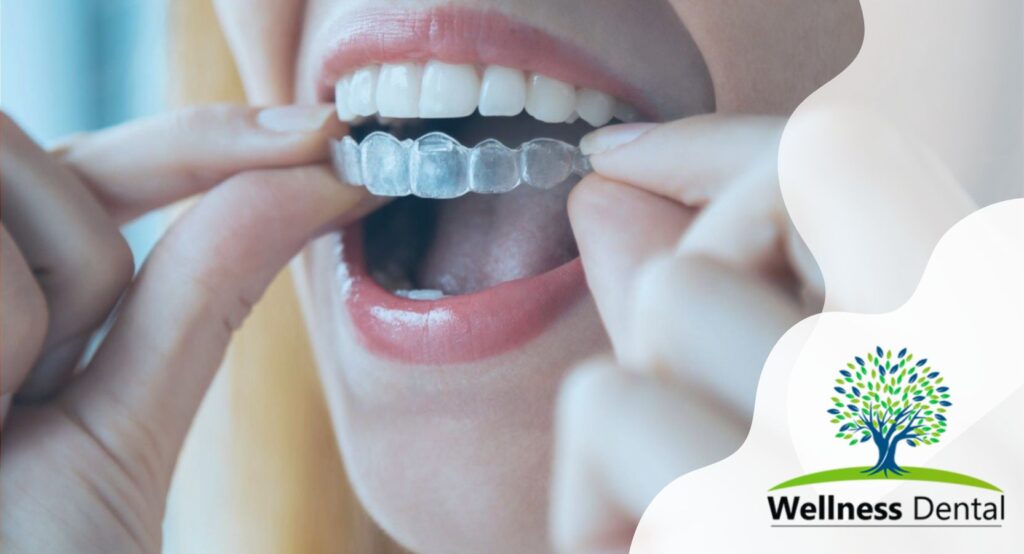
Invisalign is a sophisticated form of orthodontic treatment that utilizes a series of custom-fit clear aligners to move teeth into their ideal positions. Unlike a traditional brace, which relies on metal wires and fixed braces to pull teeth into alignment, this system uses advanced material technology. Specifically, Invisalign aligners are crafted from BPA-free plastic—a single-layer (EX30) material—designed to provide the exact amount of pressure needed for effective, comfortable tooth movement.
Because these custom-made aligners are removable, they offer a level of convenience that fixed appliances cannot match. Patients can maintain their oral hygiene with ease, removing the trays to brush and floss, which significantly reduces the risk of dental decay compared to traditional methods that trap food debris.
What does Invisalign do?
Invisalign is designed to correct a wide spectrum of orthodontic issues, including misaligned teeth, gaps between teeth, and improper bite patterns such as an Open bite or Class II malocclusions.
Beyond simple alignment, the primary goal of the system is to optimize oral health. When teeth are crowded or overlapping, they are notoriously difficult to clean, leading to gum problems and periodontal disease. By straightening the teeth, Invisalign not only enhances your aesthetic profile but also facilitates better long-term dental health, ensuring that your gums and bone structure are better supported.
Why is Invisalign Better Than Braces?
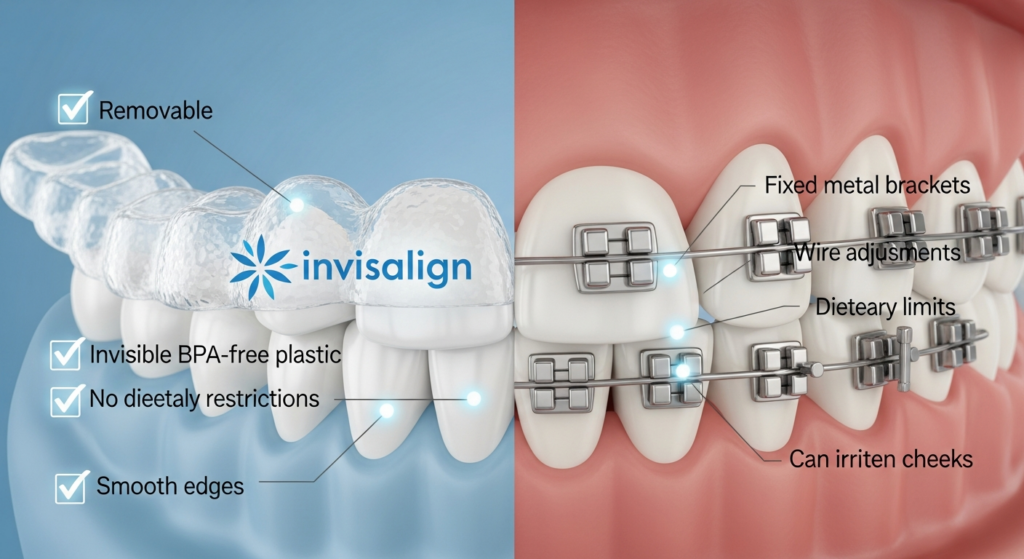
Choosing between Invisalign and fixed braces often comes down to lifestyle and comfort. The most obvious benefit of invisible aligners is their near-invisibility, allowing you to undergo teeth straightening without the self-consciousness associated with metal brackets.
Furthermore, Invisalign eliminates the dietary restrictions inherent in traditional brace wear. Because you remove the aligner trays to eat, you don’t have to worry about damaging hardware with hard or sticky foods. Additionally, the material technology used in these trays is engineered to provide controlled force, which is often reported by patients as less irritating to the soft tissues of the cheeks and lips than the sharp edges of traditional hardware.
How Does Invisalign Work?
The efficacy of Invisalign lies in its grasp of the biological response of the human mouth. When you wear your custom-fitted aligners, they apply controlled force to the teeth. This pressure stimulates the periodontal ligament, the tissue that connects your teeth to the alveolar bone.
As the aligners shift the teeth, the bone undergoes a process of remodeling—resorption and deposition—allowing for safe, predictable tooth movement. By utilizing SmartForce Attachments (small, tooth-colored composite patches) and features like precision wings, your dental provider can execute complex movements that were once only possible with heavy-duty metal appliances.
Scanning and Planning
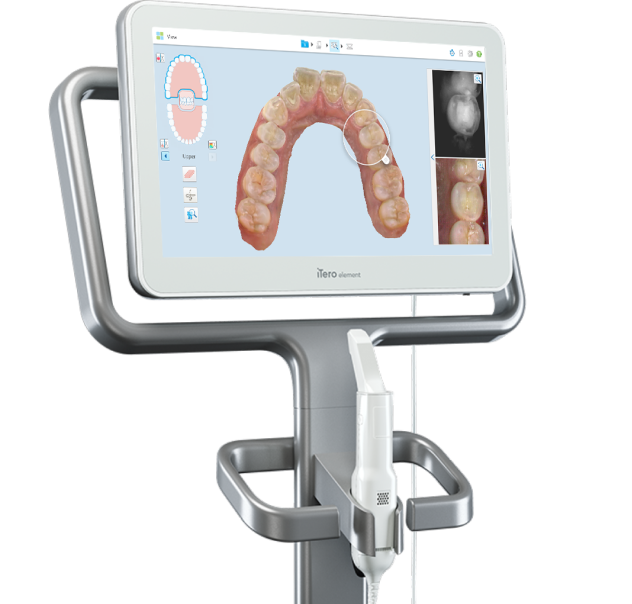
Your journey begins at a dental office with a digital scan. Using high-resolution 3D imaging technology, your dentist captures a precise 3D image of your dental anatomy. This digital scan is then processed through computer software to create a digital model of your current smile.
This treatment plan acts as a roadmap for your entire journey. Your dental professional will use this 3D modeling system to map out every increment of movement. You can often see this simulation before you even commit, allowing you to visualize your final result. This 3D Scanning process ensures that every tray you receive is part of a calculated sequence designed to reach your goal efficiently.
Putting Your Invisalign to Work

Once your custom aligner trays are manufactured in a dental lab, you begin your treatment process. You will wear each set of trays for approximately one to two weeks, depending on your personalized plan. To ensure progress, you must wear them for 22 hours a day.
Throughout this period, you may need interproximal reduction (a minimally invasive dentistry technique to create space) or the addition of composite bonding to help the trays grip specific teeth. You should also utilize dental cleaner tablets to remove food debris and keep the trays clear. Your oral hygiene remains a top priority; always brush your teeth after eating before re-inserting your aligners.
Is Invisalign Right For Me?
Invisalign is an excellent solution for many, but candidates must be disciplined. Success requires consistent wear and a commitment to your dental hygiene routine. While it is highly effective, those with severe skeletal discrepancies or specific dental implants may require a consultation to see if a combination of orthodontic systems or alternative care is necessary.
FAQ
How fast do teeth move with Invisalign?
Patients often notice subtle changes within the first few weeks. However, “fast” is relative to the complexity of the orthodontic issues being addressed. Consistent wear is the single largest variable in the speed of your results.
What are the disadvantages of Invisalign?
The main disadvantage is patient compliance; if you don’t wear the trays, your teeth won’t move. Additionally, because they are removable, they can be lost if not stored in their proper case.
How long does it take for an Invisalign to work?
Treatment duration varies by individual, but most comprehensive cases are completed in 12 to 18 months. Your dentist will provide an estimated timeline based on your specific 3D scan.
How painful is Invisalign?
You may feel mild pressure when starting a new tray, which is a sign that the controlled force is engaging. This is generally much less painful than the tightening of metal wires.
Is Invisalign faster than braces?
In many cases, yes. Because the system is custom-programmed using digital imaging technology, it can often move teeth more directly than the manual, incremental adjustments required by traditional methods.
How loose do teeth get with Invisalign?
Teeth must become slightly mobile to move through the bone. This sensation is normal and temporary; it confirms your periodontal ligament is responding to the treatment.
Can Invisalign move teeth overnight?
While constant wear ensures progress, the bone remodeling process takes time. You cannot shift teeth “overnight,” but you will see progress at every stage of your aligner therapy.