
The decision to undergo dental implant surgery is often accompanied by a significant amount of dental anxiety. For those facing the prospect of replacing missing teeth, the fear of the unknown—specifically, the fear of pain—is the most common barrier to seeking treatment. It is a natural human reaction to be apprehensive about any procedure involving the jawbone and gums. However, the modern dental landscape has evolved rapidly, shifting the focus from simply performing a surgery to curating a comfortable, predictable patient experience.
Understanding the Fear: Why Dental Anxiety is Common
Validating the Patient Experience
Dental anxiety is not merely a lack of courage; it is a complex response to previous negative dental encounters or the anticipation of surgical trauma. When you have missing teeth, you may feel vulnerable about your oral health, and the idea of further surgical intervention can feel overwhelming. Acknowledging these feelings is the first step toward overcoming them. Our dental team is trained to recognize this anxiety and provide the environment necessary to ensure your comfort throughout the entire treatment process.
Modern Dentistry vs. Past Perceptions: Why Things Have Changed
In the past, dental surgery was often associated with high levels of discomfort and prolonged recovery. Today, dentistry is driven by precision medicine. Technologies such as digital imaging and minimally invasive surgical techniques have revolutionized the dental implant procedure. By focusing on site-specific planning, dentists can now perform treatments that were once considered major surgeries with significantly less downtime and minimal pain, shifting the narrative from fear to empowerment.
Phase 1: During the Procedure—The “Comfort Experience”
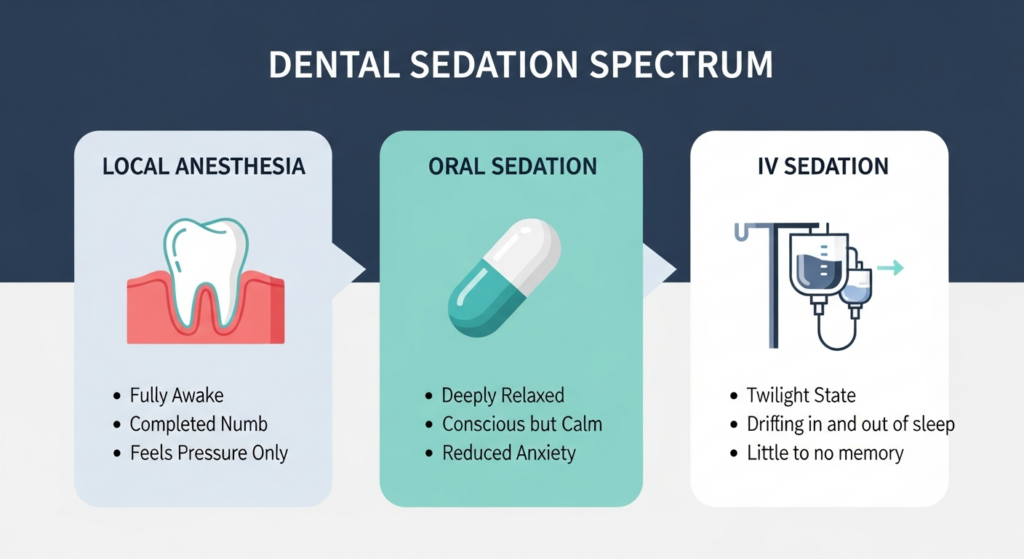
A comparison of comfort options during implant surgery, ranging from localized numbing to advanced IV sedation.
The Role of Local Anesthesia in Numbing the Surgical Site
The foundation of a painless procedure is the administration of high-quality local anesthesia. By numbing the specific area of the gums and bone where the implant will be placed, the surgeon ensures that you feel no sharp sensations during the operation. While you may perceive pressure or vibration—which is a normal sensation during any bone-related work—the nerve pathways responsible for pain signals are effectively blocked.
Sedation Options: From Oral Sedation to IV Sedation Dentistry
For patients with higher levels of dental anxiety, various sedation options are available to elevate comfort. Oral sedation can help you remain deeply relaxed, while IV sedation offers a “twilight” state where you may drift in and out of sleep, often with little to no memory of the surgery afterward. These tools ensure that the patient remains calm and stationary, allowing the surgeon to work with maximum precision.
How 3D Computerized Planning Minimizes Surgical Trauma
Modern implant surgery often utilizes 3D cone-beam computed tomography (CBCT) scans. This technology allows the surgeon to visualize the exact density and structure of your jawbone before the procedure begins. By mapping out the precise location of nerves and blood vessels, the surgeon avoids unnecessary trauma. This proactive planning reduces the likelihood of complications and ensures that the implant is placed in the healthiest bone available.
Why Surgical Skill and Precision Reduce Post-Op Discomfort
The technique used to prepare the site is critical. A skilled clinician uses low-speed, high-torque instruments that preserve the surrounding tissues. By minimizing heat generation and surgical trauma during the preparation of the bone, the body’s inflammatory response is kept to a minimum. This precision directly translates into a much smoother recovery.
Phase 2: The First 72 Hours (The Management Phase)
The “Numbness Window”: What Happens When Anesthesia Wears Off
As the local anesthetic begins to subside, you may feel a dull ache or tingling in the surgical area. This is a normal physiological response to tissue trauma. The key is to get ahead of this “numbness window” by taking your first dose of prescribed or over-the-counter medication as recommended by your dentist, before the total sensation returns.
Managing Swelling and Post-Op Soreness
Swelling typically peaks around 48 to 72 hours after surgery. Using cold compresses on the exterior of the jaw can significantly mitigate this inflammatory response. Keeping your head elevated while resting is another simple but highly effective way to reduce the throbbing sensation that can occur when blood flow increases to the area.
Pain Management: Over-the-Counter Relievers vs. Prescription Medication
Most patients find that a combination of over-the-counter anti-inflammatories and pain relievers is sufficient to manage post-operative soreness. Your dentist will provide a personalized plan, potentially including prescription medication if your case involved more complex bone grafting. Adhering strictly to the provided dosing schedule is the best way to remain ahead of any potential discomfort.
The “Comfort Score”: A Day-by-Day Expectation Guide
- Day 1: Numbness persists, followed by mild tenderness. Rest is vital.
- Day 2: Peak soreness and minor swelling are common.
- Day 3: Swelling begins to subside; most patients feel a significant improvement.
- Day 4 and beyond: Discomfort should be minimal, manageable with occasional medication.
Phase 3: The Long-Term Healing Process (Osseointegration)
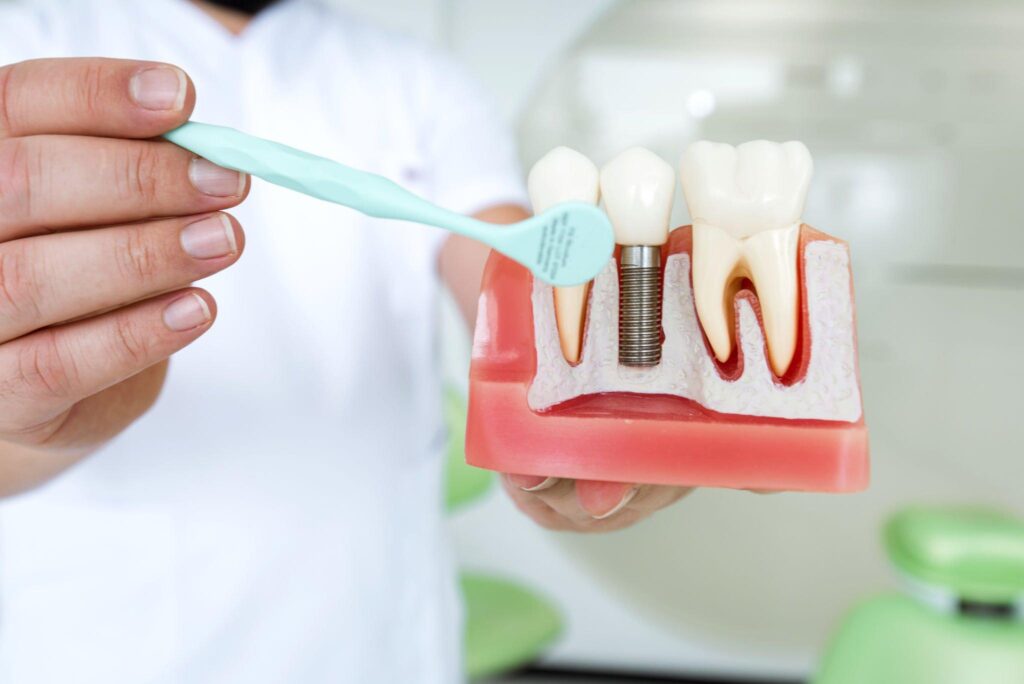
How the Titanium Post Merges with Your Jawbone
Osseointegration is the biological process where your bone cells fuse with the surface of the titanium implant. This integration creates a permanent, rock-solid foundation. Because this process happens beneath the gums, you generally feel nothing during the months of healing.
Sensations to Expect During the Healing Months
Once the initial surgical soreness fades, the implant site should be completely silent. You may occasionally feel a strange “fullness” in the gum tissue, but sharp pain is not a normal symptom of osseointegration.
Placing the Abutment and Crown: The Final (Pain-Free) Steps
When the implant is fully healed, the final steps involve attaching the abutment and the custom-made crown. This phase is largely non-invasive and often requires little to no anesthesia, marking the return of your full, functional, and aesthetic smile.
How Dental Implant Pain Compares to Other Procedures
| Procedure | What It Involves | Typical Recovery Experience | How It Compares to Dental Implants |
|---|---|---|---|
| Simple Tooth Extraction | Removing a damaged or problematic tooth, leaving a socket to heal naturally. | Can involve soreness and tenderness as the extraction site heals. | Implant surgery is often more controlled and may result in less long-term discomfort than a simple extraction. |
| Wisdom Tooth Removal | Extraction of one or more wisdom teeth, often in hard-to-reach areas. | Swelling, jaw stiffness, and discomfort are common, especially with multiple teeth removed. | Dental implants are usually more localized, making recovery easier for most patients compared to wisdom tooth removal. |
| Root Canal Therapy | Treating infection inside a tooth by removing damaged pulp and sealing the tooth. | Patients may already be dealing with significant pain from infection before treatment. | Implant treatment often feels more predictable and less painful, since it replaces a prepared site rather than treating an active infection. |
| Dental Implant Surgery | Placement of a titanium post into the jawbone to replace a missing tooth root. | Mild soreness and swelling are common, but most patients manage discomfort with OTC medication and return to normal activities quickly. | Removing a damaged or problematic tooth leaving a socket to heal naturally. |
Factors That Can Influence Your Recovery Experience
Single Tooth vs. Full Arch Restorations (All-on-4)
While a single implant is a quick procedure, full-arch restorations require more extensive work. However, modern techniques like the All-on-4 method are designed to be efficient, often allowing patients to walk out with a temporary set of teeth immediately.
The Impact of Bone Grafting on Recovery Time
If your jawbone requires a graft for stability, the surgical site may be slightly more tender, and the recovery timeline may be slightly longer. Your dentist will advise you on what to expect based on your bone density.
Pre-existing Conditions: Gum Disease and Bone Loss
Gum health is paramount. If you have active periodontitis, your dentist will require that it be treated before your implant surgery to ensure the success of the treatment and to avoid potential infection.
Lifestyle Factors: How Smoking Affects the Healing Rate
Smoking is the primary enemy of osseointegration. It restricts blood flow to the gums and bone, dramatically increasing the risk of failure and discomfort. Quitting before and after your procedure is the best way to protect your investment.
Recovery Support for Arizona Dental Implant Patients
If you are considering dental implants and still have concerns about pain or recovery, speaking with an experienced implant team can make the process feel much more predictable. A personalized treatment plan, proper imaging, and clear post-operative instructions can significantly improve comfort and healing outcomes.
For patients in the Glendale area, professional guidance before and after implant surgery can help reduce anxiety and improve recovery confidence.
Wellness Dental
📍 20325 N 51st Ave Suite 162–164, Glendale, AZ 85308
📞 (623) 303-0044
Office Hours
Mon – Thu: 9:00 AM – 5:00 PM
Fri: 9:00 AM – 2:00 PM
Sat – Sun: Closed
For patients in the Surprise, AZ dental implant clinic area, our team provides the same personalized pre- and post-operative guidance to ensure a confident and comfortable recovery.
Your Post-Surgery Recovery Toolkit
The “Soft Foods” Diet: Nutritious Options
Focus on protein-rich soft foods like yogurt, smoothies, eggs, and cooked vegetables. Avoiding crunchy or spicy foods for the first week protects the surgical site from mechanical irritation.
Oral Hygiene Protocol: Antibacterial Mouthwash and Gentle Cleaning
Maintain hygiene by using an antibacterial mouthwash and carefully cleaning around the site with a soft-bristled brush. Preventing an infection is your primary responsibility in the healing process.